Question of Privilege
December 9, 1986
Contempt of the House: American citizen alleged to have knowledge of legislative content of bill prior to its introduction in the House
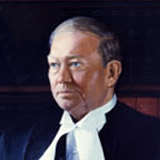
Hon. John Fraser
Speaker of the House
Ruling Text
The Speaker:
I shall now deal with the matter raised by the honourable Member for Kamloops—Shuswap on November 21. I would first like to express my appreciation of the great care with which the honourable Member presented his complaint and the conscientious research which he undertook in the preparation of his case. This was very helpful to the Chair.
I think it would be useful to reiterate the tests which the Chair must apply to a complaint before declaring that a prima facie case of privilege has been established. There are a number of questions which may be applicable depending on the nature of the complaint. Has the freedom of speech of an honourable member been menaced or called into question? Has an honourable Member been obstructed in anyway in the fulfilment of his or her parliamentary duty? Has any attempt been made through bribery or other corrupt means to influence an honourable Member in an improper way? Has an honourable Member been subjected to harassment, threats, abuse, physical violence or any other form of molestation in relation to his or her parliamentary conduct? Has the House as a whole been brought into disrepute through the action complained of? Finally, what evidence exists which might suggest the possibility of an affirmative answer to any of these questions? Obviously, the Chair can only find that a prima facie case has been established if there is evidence to base it on.
The basis of the complaint of the honourable Member for Kamloops—Shuswap is an allegation that an American citizen, by some means which do not appear to have been established, obtained prior knowledge of the contents of Bill C-22 before its introduction in the House. In the course of his presentation he referred to two United Kingdom precedents and a complaint raised in 1983 by the honourable Member for Yukon (Hon. Erik Nielson) relating to an incident which took place here in Canada. The cases referred to all concerned budget leaks. The U.K.
cases were based on established facts. In one case, the Chancellor of the Exchequer acknowledged that he had committed an indiscretion and resigned. In the other, an investigation established that an impropriety had occurred and a Minister resigned in consequence. Incidentally, neither of these cases was dealt with by way of a question of privilege. In the Canadian case, Madam Speaker Sauvé found that there was no basis for a question of privilege. Budget secrecy was a matter of convention and not a matter for the determination of the Chair.
To return to the case before us, the Chair must first determine what the facts are and, second, whether those facts constitute evidence of a prima facie case of privilege. The honourable Member's case is based on certain comments made by a former President of the United States Pharmaceutical Manufacturers Association in the course of a television interview. The honourable Member made it clear that he was not implying that the Minister of Consumer and Corporate Affairs had revealed the contents of the bill to the gentleman in question; and the Minister himself stated emphatically that while various consultations had taken place he had at no time been in contact with anyone in the United States. It therefore seems to the Chair that incontrovertible facts are lacking.
I must also make reference to the contribution of the honourable Member for Windsor West who suggested that under our new Standing Order 1, the Chair is no longer bound by established precedents relating to matters of privilege and that, to quote his own words, it is open to the Chair: "to extend the definition of privilege to new areas". It is important, though, that we do not confuse privilege with procedure. In matters of procedure, the new Standing Order 1 possibly enlarges the scope of the House in determining procedure in unprovided cases. The limits of privilege, though, are laid down by statute. It is not open to the Chair to extend the definition of privilege. This could only be done by legislation and would involve an amendment to the Constitution. I must therefore rule that no facts have been presented on which a prima facie case of privilege could be based.
I think it is appropriate for the Chair to remind all honourable Members that these kinds of incidents do cause grave concern among honourable Members and I believe it is a good reason why extra special care should be taken, especially by Ministers, to ensure that matters that ought properly to be brought to the House do not in any way get out in the public domain and cause concern to honourable Members and often to Ministers as well.
I want to thank all honourable Members who participated in the debate [...] and I hope the comments that I made will be helpful to all honourable Members. I thank them.
F0108-e 33-2 1986-12-09.
[1]
Debates, November 21, 1986, pp. 1405 - 12.
Edit Metadata
Holding
"No prima facie case of privilege could be found because the allegation of a bill's contents being leaked prior to its introduction was not supported by incontrovertible facts."
AI Summary
The Speaker denied a question of privilege regarding an alleged bill leak, ruling there was insufficient evidence to establish a prima facie case.
AI Analysis
- Outcome
- Denied
- Tone
- Educational
- Procedural Stage
- Routine Proceedings
- Significance
Low
High