Question of Privilege
December 4, 1986
Standing Committee on Private Members' Business; selection of votable items; criteria
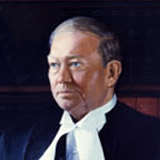
Hon. John Fraser
Speaker of the House
Ruling Text
Mr. Speaker:
Honourable Members will remember that on November 19 a question of privilege was raised by the honourable Member for Peterborough. The honourable Member expressed himself very forcefully and made it clear that he felt a deep sense of grievance, not only on his own behalf but on behalf of private Members on both sides of the House. It was also made clear during the discussion that his feelings are shared by other honourable Members.
The honourable Member for Burlington (Mr. Bill Kempling), who is Chairman of the Standing Committee on Private Members' Business, and other members of the committee made useful contributions to the discussion which clarified for us some of the problems faced by the committee and the approach the committee has been taking in the discharge of its functions.
The House is operating under a number of new procedures, those relating to Private Members' Business being among the most significant. The concept of the Standing Committee on Private Members' Business and the special responsibilities conferred on it are both new and original. There are no precedents to guide the committee. It has a very unusual power and I stress that it has a very unusual power in that its decision with regard to the selection of items of business which must come to a vote cannot be challenged. When embodied in a report which is presented to the House, that report is deemed adopted by the House. The committee, therefore, plays a very important role in safeguarding the rights of private Members.
There is a procedural point which I should perhaps clarify before proceeding any further. The items selected by the committee from those in the order of precedence resulting from the draws which take place throughout the session are commonly referred to as "votable items". The fact is that all items in the order of precedence are votable if the House is disposed to reach a decision on them during the time allocated to debating them.
The difference between the items selected by the committee and the other items in the order of precedence is that the former are guaranteed to come to a vote, provided nothing intervenes to prevent it, such as the prorogation of Parliament. They are therefore privileged items. The committee must determine, in accordance with a set of criteria which it has adopted and published in a report, how the selection is made. This is a crucial responsibility. It is not for the Chair to dictate to the committee how it should discharge its responsibilities.
However, the honourable Member for Peterborough raised an important question: Is it appropriate to use as a criterion the possibility that another committee might take the initiative of investigating the subject matter of a Bill or motion which happens to fall within its mandate? There is no guarantee that a committee will take the necessary initiative. Furthermore, there is nothing to prevent the House from making a specific reference to a committee even if that committee has an open mandate.
All items of Private Members' Business which were entered in the draw were previously examined and found to be in order. The motion of the honourable Member for Peterborough which was successful in the draw reads as follows:
That the Standing Committee on Justice and Solicitor General be empowered to study and report on the arguments for and against capital punishment giving consideration to allowing the question of capital punishment to come to a free vote in the House.
If the House were to adopt this motion, the matter would be referred to the Justice Committee. It cannot be assumed that without such a reference the committee would launch such an investigation. If the criterion I have referred to were to pass unquestioned, there would be numerous motions which would never stand a chance of being selected by the Private Members' Business Committee.
Most new procedures pose difficulties which had not previously been anticipated. The House is the master of its own procedure and can therefore change any with which it is not satisfied. The new procedures relating to Private Members' Business, among others, are provisional in their application because the House wanted to see how they would work before confirming them on a permanent basis. The complaint of the honourable Member for Peterborough, and the discussion which ensued upon it, clearly demonstrated to my satisfaction that there are aspects of these new procedures which need to be reconsidered. My point, however, is that this is a procedural matter which requires a procedural solution.
In summing up I would say that the Chair appreciated the concerns expressed by the honourable Member for Peterborough and other Members participating in the discussion. I have to rule though that the matter complained of relates to procedure rather than privilege. However, I would call upon the Standing Committee on Elections, Privileges and Procedure to give early attention to this matter and treat it with the priority it merits.
The new Standing Orders governing Private Members' Business are provisional and the time to deal with this problem is now. I am sure that I speak on behalf of all private Members when I express the hope that an early solution will be found.
I want to thank all honourable Members who contributed to the debate. I want to emphasize that it is the view of the Chair that this matter is serious, that there are other serious matters coming from the consequences of reform and it is the Chair's very fervent wish that honourable Members and the appropriate committee take cognizance of the remarks that I have made today and treat the matter with the urgency which I think all honourable Members feel is necessary.
F1002-e 33-2 1986-12-04.
[1]
Journals, February 13, 1986, p. 1710.
[2]
Journals, May 23, 1986, pp. 2200-1.
[3]
Debates, November 19, 1986, pp. 1325-34.
Edit Metadata
Holding
"The complaint regarding the selection criteria for votable Private Members' Business does not constitute a prima facie question of privilege, but is a procedural matter to be reviewed by the Standing Committee on Elections, Privileges and Procedure."
AI Summary
The Speaker ruled that a complaint about the selection criteria for votable Private Members' Business was a procedural matter, not a question of privilege, and referred the issue to the procedure committee for review.
AI Analysis
- Outcome
- Denied
- Tone
- Educational
- Procedural Stage
- Speaker's Ruling
- Significance
Low
High