Ruling
December 1, 1986
Petition for Private Bill; application of Standing Orders respecting certification and presentation of petitions
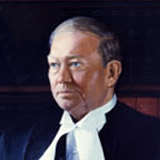
Hon. John Fraser
Speaker of the House
Ruling Text
Mr. Speaker:
The Chair wishes to report to the House on a matter of some importance concerning petitions introducing laws, and I will read the ruling.
An entry in the Votes and Proceedings of November 17 recorded the presentation of a petition whose petitioners requested the tabling of a Private Bill. The entry indicated that the petition was presented pursuant to Standing Order 132, which provides a time limit for receiving petitions for Private Bills.
The Standing Orders relating to petitions were recently changed. However, no account was taken of the implications of those changes in relation to private Bills. The present Standing Orders dealing with petitions are Standing Order 106 and Standing Order 106(2)(g). They provide that a petition must contain at least 25 signatures. No distinction is made between petitions seeking redress of grievances and those requesting private Bills. On the face of it, therefore, the requirement of 25 signatures applies to all petitions including those relating to Private Bills. It was for that reason that the petition in question was shown as having been presented pursuant to Standing Order 132 instead of Standing Order 106.
However, I feel the petition should have been presented pursuant to Standing Order 106, despite the requirement for twenty-five signatures. I suppose the fact that petitions for Private Bills are not exempted from this requirement is merely an oversight I do not believe it was the intention of the House to deny any individual or group the right to petition for a Private Bill by reason of the failure to obtain 25 signatures. I am therefore ruling, until such time as the House decides otherwise, that the requirement of 25 signatures does not apply to petitions for Private Bills, but that the other provisions of Standing Order 106 do apply. Presentation of all petitions will thus continue to be governed by Standing Order 106.
I suggest that the Standing Committee on Elections, Privileges and Procedure examine this problem in the course of its business and recommend amendments to the Standing Orders as appropriate.
Postscript In June 1987, the Standing Orders were amended to correct this anomaly. Petitions for Private Bills were thereafter governed by a separate rule, distinct from that pertaining to ''public petitions".
[3]
F1001-e 33-2 1986-12-01.
[1]
Votes and Proceedings, February 13, 1986, p. 1710.
[2]
Votes and Proceedings, November 17, 1986, p. 196.
[3]
Votes and Proceedings, June 3, 1987, pp. 1014-5. See Standing Order 132 in the June 8, 1987 version of the written rules.
Edit Metadata
Holding
"The 25-signature requirement for petitions under Standing Order 106 does not apply to petitions for Private Bills, which is deemed an unintentional legislative oversight."
AI Summary
The Speaker rules that the 25-signature requirement for petitions does not apply to petitions for Private Bills due to a procedural oversight in the Standing Orders.
AI Analysis
- Outcome
- Other
- Tone
- Educational
- Procedural Stage
- Not specified
- Significance
Low
High