Ruling
October 29, 1986
Guidelines: authority of the Chair to interrupt/admonish Members and maintain order; prohibition against personal attack on a Member
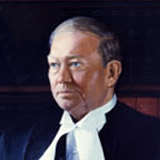
Hon. John Fraser
Speaker of the House
Ruling Text
The Speaker:
The Chair indicated several days ago that consideration would be given to the question of privilege raised by the honourable Member for Burnaby, and the matter would be brought back to the Chamber.
On October 27, 1986, the honourable Member for Burnaby rose on a question of privilege at the end of Question Period to suggest that his privileges as a Member had been infringed by the Chair's interruption of his statement under Standing Order 21 earlier that day. In that earlier statement he had called upon all Members of the House to join with him in "condemning the offensive and degrading references which were made by the honourable Member for Bow River to homosexuals who seek to work within the RCMP ". Similarly, on October 28, 1986, the Chair intervened during a statement made pursuant to Standing Order 21 by the honourable Member for Burnaby.
All Members will recall that when the Member for Bow River made his statement on October 20, 1986 I had interrupted him and asked him to "examine some of the words in his statement which might very well be very offensive to a great number of Canadians and might cause a question of privilege or point of order in the Chamber". The Member for Bow River was allowed to continue his remarks, but clearly he did heed the advice from the Chair.
If the Chair interrupted the Member for Bow River and requested him to review the language he was using, which he in fact did, then surely the Chair was also under the obligation to interrupt the Member for Burnaby who was attempting, under the guise of a statement under Standing Order 21, to comment upon the same language that the Chair had already dealt with. Such comments would not have been in order a week following the initial event using the usual vehicle of a point of order or question of privilege, because the time for raising such matters had expired and the matter had already been dealt with. In the Chair's view, such comments were also not in order using a Standing Order 21.
The Member for Burnaby was quite correct when he stated that Members are protected by parliamentary privilege for what they say in the Chamber. However, he will also realize that in order to protect this privilege, Members have imposed upon themselves certain restrictions as to what they may or may not say. Certain language is unparliamentary and not allowed. Likewise, certain actions are prohibited in our practice. It is the Chair's duty to enforce these restrictions. I have said on another occasion that these restrictions have not been imposed unilaterally on this chamber, but have been designed by the Members in this Chamber and brought here by consent.
As Speaker Sauvé stated on January 17, 1983 when setting out guidelines for the current Standing Order 21, "The time set aside for Member's Statements should not be used to make personal attacks".
[5]
I concur totally with this admonition and suggest to the honourable Member for Burnaby that this is a prohibition which the Chair must enforce in order to maintain decorum in this Chamber and to protect all Members.
Standing Order 21 requires the Speaker to "order a Member to resume his or her seat if, in the opinion of the Speaker, improper use is made of this Standing Order". It is advisable for all honourable Members to remember that when this new order was drafted those who sat in judgment on this matter decided deliberately not to try to codify every possible exigency that might arise. I repeat what the order reads:
The Speaker may order a Member to resume his or her seat if, in the opinion of the Speaker, improper use is made of this Standing Order.
In the Chair's view, the use of Standing Order 21 to ask the House to condemn language used by another honourable Member in a situation where the Chair had already raised the matter and dealt with it was an improper use of the Standing Order. I have examined the record and the rules and reread the comments made by all honourable Members. I am still of the same view. Therefore, I do not feel that the honourable Member for Burnaby has a valid question of privilege.
I wish to add something to these comments. As I have said in this House regarding this not easy issue, Members have a right to debate issues in this Chamber, no matter how delicate or difficult they may be. But in the use of the language with which they debate it, the Chair must always be mindful that one cannot have free debate in the Chamber without order.
F0302-e 33-2 1986-10-29.
[1]
Debates, October 20, 1986, p. 510.
[2]
Debates, October 27, 1986, p. 757.
[3]
Debates, October 27, 1986, pp. 767-8.
[4]
Debates, October 28, 1986, p. 810.
[5]
Debates, January 17, 1983, p. 21874.
Edit Metadata
Holding
"A Member does not have a valid question of privilege when the Speaker interrupts their S.O. 21 statement, if that statement is being used improperly to condemn another Member for language the Chair has already addressed."
AI Summary
The Speaker ruled that using a Member's Statement (S.O. 21) to condemn another Member's language on a matter already addressed by the Chair is an improper use of the Standing Order and does not constitute a valid question of privilege.
AI Analysis
- Outcome
- Denied
- Tone
- Educational
- Procedural Stage
- Speaker's Ruling
- Significance
Low
High