Point of Order
March 15, 1985
Member monopolizing
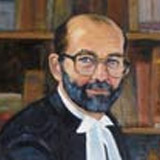
Hon. John Bosley
Speaker of the House
Ruling Text
<div class="DecisionMain" role="main">
<!-- InstanceBeginEditable name="Main Content" -->
<p class="decision-chapter">
Rules of Debate - Order and Decorum / Question-and-comment Period
</p>
<div>
</div>
<p class="d-DecisionDate">
<time>March 15, 1985</time>
</p>
<p class="e-Debates">
Debates <a href="https://parl.canadiana.ca/view/oop.debates_HOC3301_02/1587?r=0&s=1">p. 3062</a>
</p>
<div><h2 class="f-ContextResoEdNotePostscriptTitle">Background</h2></div>
<p class="g-ContextResoEdNotePostscript">
During the question-and-comment period following a speech by Mr. Waddell (Vancouver—Kingsway) on the motion for second reading of Bill C-24 (Act to amend the Oil Substitution and Conservation Act and the Canadian Home Insulation Program Act), Mr. McDermid (BramptonGeorgetown) raised a point of order, saying that Mr. Waddell had been talking for nine minutes and was in fact making another speech. Mr. Waddell replied that he was merely responding to the question that he had been asked. The Deputy Speaker ruled immediately.
</p>
<h2 class="f-ContextResoEdNotePostscriptTitle">Issue</h2>
<p class="g-ContextResoEdNotePostscript">
Is a Member permitted to speak at length during the question-andcomment period?
</p>
<h2 class="f-ContextResoEdNotePostscriptTitle">Decision</h2>
<p class="g-ContextResoEdNotePostscript">
No. No one may monopolize the ten-minute question-and-comment period.
</p>
<h2 class="f-ContextResoEdNotePostscriptTitle">Reasons given by the Deputy Speaker</h2>
<p class="g-ContextResoEdNotePostscript">
The committee which recommended the introduction of the ten-minute question-and-comment period out lined in its report to the House the manner in which it envisaged that these questions and comments would take place. The report specified that the exchanges would be short and sharp, that more than one Member would speak in the ten minutes available, and that the Member whose speech was the subject of the questions and comments would be given time to reply. The committee expressed the hope that the Chair would control the interventions to promote a series of exchanges that would enliven debate.
</p>
<div class="FootnoteContainer"><div "="" class="alert alert-info"><p>Some third-party websites may not be compatible with assistive technologies. Should you require assistance with the accessibility of documents found therein, please contact <a href="mailto:accessible@parl.gc.ca">accessible@parl.gc.ca</a>.</p></div>
<h2 class="f-ContextResoEdNotePostscriptTitle">Sources cited</h2>
<p class="g-ContextResoEdNotePostscript">
Special Committee on Standing Orders and Procedure, Third Report, November 5, 1982, <a href="https://parl.canadiana.ca/view/oop.com_HOC_3201_37_1/534?r=0&s=1">p. 7:16</a>.
</p>
<h2 class="f-ContextResoEdNotePostscriptTitle">References</h2>
<p class="g-ContextResoEdNotePostscript">
Debates, March 15, 1985, <a href="https://parl.canadiana.ca/view/oop.debates_HOC3301_02/1587?r=0&s=1">pp. 3061-2</a>.
</p>
</div>
<!-- InstanceEndEditable -->
</div>
Edit Metadata
Holding
"The member with the floor is reminded to adhere to the principles of relevance and to conclude their remarks to ensure other members have an opportunity to participate in the debate."
AI Summary
The Speaker addresses a point of order about a member monopolizing debate by reminding them of the rules of relevance and repetition.
AI Analysis
- Outcome
- Other
- Tone
- Educational
- Procedural Stage
- Government Orders
- Significance
Low
High
AI Keywords
Cited Authorities
- House of Commons Procedure and Practice (3rd)