Other
February 11, 1985
Parliamentary Secretaries
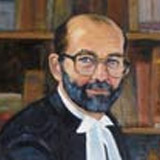
Hon. John Bosley
Speaker of the House
Ruling Text
<div class="DecisionMain" role="main">
<!-- InstanceBeginEditable name="Main Content" -->
<p class="decision-chapter">
Rules of Debate - Order and Decorum / Right of Reply
</p>
<div>
</div>
<p class="d-DecisionDate">
<time>February 11, 1985</time>
</p>
<p class="e-Debates">
Debates <a href="https://parl.canadiana.ca/view/oop.debates_HOC3301_02/745?r=0&s=1">pp. 2219-20</a>
</p>
<div><h2 class="f-ContextResoEdNotePostscriptTitle">Background</h2></div>
<p class="g-ContextResoEdNotePostscript">
On February 11, 1985, the House resumed consideration of the motion that Bill C-20 (Act to amend the Canadian Radio-Television and Telecommunications Commission Act) be read a second time and referred to the Standing Committee on Communications and Culture. Before recognizing Mr. Scott (Parliamentary Secretary to the Minister of Communications) on debate, the Acting Speaker (Mr. Charest) drew the attention of the House to the procedure which would apply in the situation. A Minister moving the second reading of a bill has the right of reply, meaning that if the Minister speaks a second time to the motion, that speech closes debate. If a Minister moves a motion for second reading on behalf of another Minister, either one has the right of reply. There has been some question, however, and the precedents conflict, whether a Parliamentary Secretary has the right of reply on be half of his or her Minister. The Acting Speaker ruled immediately.
</p>
<h2 class="f-ContextResoEdNotePostscriptTitle">Issue</h2>
<p class="g-ContextResoEdNotePostscript">
Does a Parliamentary Secretary, speaking on a Government billon behalf of his or her Minister, have the right of reply?
</p>
<h2 class="f-ContextResoEdNotePostscriptTitle">Decision</h2>
<p class="g-ContextResoEdNotePostscript">
No. Unanimous consent is required for a Parliamentary Secretary to close the debate.
</p>
<h2 class="f-ContextResoEdNotePostscriptTitle">Reasons given by the Acting Speaker</h2>
<p class="g-ContextResoEdNotePostscript">
There is no explicit reference in either the Stan ding Orders or <i>Beauchesne</i> to a Parliamentary Secretary's having the right to close the debate on second reading. Speaker Michener ruled in 1957 that leave of the House must first be obtained. (The Acting Speaker then asked the House for its unanimous consent to allow Mr. Scott to close debate. Consent was denied.)
</p>
<div class="FootnoteContainer"><div "="" class="alert alert-info"><p>Some third-party websites may not be compatible with assistive technologies. Should you require assistance with the accessibility of documents found therein, please contact <a href="mailto:accessible@parl.gc.ca">accessible@parl.gc.ca</a>.</p></div>
<h2 class="f-ContextResoEdNotePostscriptTitle">Sources cited</h2>
<p class="g-ContextResoEdNotePostscript">
Standing Order 41(2), (3).
</p>
<p class="g-ContextResoEdNotePostscript">
Beauchesne, 5th ed., p. I00, c. 305(1), (2).
</p>
<p class="g-ContextResoEdNotePostscript">
Debates, November 7, 1957, <a href="https://parl.canadiana.ca/view/oop.debates_HOC2301_01/879?r=0&s=1">pp. 877-8</a>.
</p>
</div>
<!-- InstanceEndEditable -->
</div>
Edit Metadata
Holding
"Insufficient text provided for analysis."
AI Summary
The provided text is not a Speaker's Ruling and is insufficient for analysis.
AI Analysis
- Outcome
- Other
- Tone
- Neutral
- Significance
Low
High