Other
March 27, 1984
Amendment to refer subject matter of motion to committee
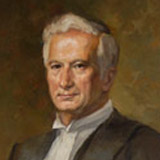
Hon. Lloyd Francis
Speaker of the House
Ruling Text
<div class="DecisionMain" role="main">
<p class="decision-chapter">Amendments and Subamendments to Motions / Miscellaneous</p>
<div>
</div>
<p class="d-DecisionDate">
<time>March 27, 1984</time>
</p>
<p class="e-Debates">Debates <a href="https://parl.canadiana.ca/view/oop.debates_HOC3202_03/132?r=0&s=1">pp. 2494-5</a></p>
<div>
<h2 class="f-ContextResoEdNotePostscriptTitle">Background</h2>
</div>
<p class="g-ContextResoEdNotePostscript">During debate on the Private Members' motion in the name of Miss Campbell (South West Nova) concerning an amendment to the Income Tax Act allowing unpaid volunteer firemen to deduct from their incomes expenses incurred in the exercise of their duties, a number of Members spoke of referring the subject matter of the motion to committee. The Deputy Speaker brought to the attention of the House Citation 435(1) of Beauchesne's Fifth Edition which states, "It is not an amendment to a motion that the question go to a committee." He suggested that the matter could be disposed of in two ways: by accepting the motion or by rejecting the motion outright, or by sending the motion to a committee to have it redrafted in a form acceptable to the Chair. Mr. Crosby (Halifax West) proposed an amendment that the content of the motion be presented for consideration to the appropriate standing committee. The Deputy Speaker ruled immediately.</p>
<h2 class="f-ContextResoEdNotePostscriptTitle">lssue</h2>
<p class="g-contextResoEdNotePostscript">Is an amendment to refer the subject matter of a motion to committee in order?</p>
<h2 class="f-ContextResoEdNotePostscriptTitle">Decision</h2>
<p class="g-contextResoEdNotePostscript">No. The amendment is out of order.</p>
<h2 class="f-ContextResoEdNotePostscriptTitle">Reasons given by the Deputy Speaker</h2>
<p class="g-contextResoEdNotePostscript">The Deputy Speaker repeated his previous comments and elaborated for the House. The wording "That in the opinion of this House the Government should consider the advisability" is an invitation to the Government to consider the contents of the motion and nothing else. "As a matter of parliamentary practice, you do not refer the subject matter of a motion of this nature to a committee. The subject matter is the motion itself. It has to be disposed of here and now. It cannot be disposed of in another place such as a committee of the House." Since the power to initiate the expenditure of money is a royal prerogative, Private Members' motions are worded in this fashion so as not to incur an out right expenditure by the Government but simply ask the Government to consider doing just that. This is the only possibility Members have of debating this type of initiative.</p>
<h2 class="f-ContextResoEdNotePostscriptTitle">Sources cited</h2>
<p class="g-contextResoEdNotePostscript">Beauchesne, 5t h ed., p. 154, c. 435(1).</p>
<h2 class="f-ContextResoEdNotePostscriptTitle">References</h2>
<p class="g-contextResoEdNotePostscript">Debates, March 27, 1984, <a href="https://parl.canadiana.ca/view/oop.debates_HOC3202_03/127?r=0&s=1">pp. 2489-93</a>.</p>
</div>
Edit Metadata
Holding
"The provided text is a title for a procedural action, not a Speaker's Ruling, so no holding can be determined."
AI Summary
The input text is a title describing a procedural amendment to refer a motion's subject matter to a committee, not a Speaker's Ruling.
AI Analysis
- Outcome
- -
- Tone
- -
- Significance
Low
High