Other
March 18, 1982
Adjournment; division bells
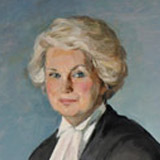
Hon. Jeanne Sauvé
Speaker of the House
Ruling Text
<div class="DecisionMain" role="main">
<p class="decision-chapter">
Precedence and Sequence of Business / Superseding Motion
</p>
<p class="d-DecisionDate">
<time>March 18, 1982</time>
</p>
<p class="e-Debates">Debates <a href="https://parl.canadiana.ca/view/oop.debates_HOC3201_14/327?r=0&s=1">pp. 15555-7</a></p>
<div>
<h2 class="f-ContextResoEdNotePostscriptTitle">Background</h2>
</div>
<p class="g-contextResoEdNotePostscript">On March 2, immediately after Government orders were called, the Speaker rendered her decision on the point of order raised the previous day by Mr. Andre (Calgary Centre), who argued that Bill C‑94, the Energy Security Act, 1982, was an unwieldy omnibus bill which should be divided. The Speaker, having examined recent precedents, ruled that there were no rules or guidelines on omnibus bills to support a request to divide or strike down Bill C‑94. After considerable discussion on the issue, Mr. Andre moved, "That this House do now adjourn." When the Speaker put the question, a recorded division was called. For days, the party Whips did not appear at the Table to signify their intention of proceeding with the vote, and the division bells rang day and night. Finally, on Wednesday, March 17, 1982, the House voted. The following day, the Speaker made a statement to the House.</p>
<h2 class="f-ContextResoEdNotePostscriptTitle">Issue</h2>
<p class="g-contextResoEdNotePostscript">Were the rules clear enough to permit the Speaker to intervene and stop the division bells?</p>
<h2 class="f-ContextResoEdNotePostscriptTitle">Statement</h2>
<p class="g-contextResoEdNotePostscript">Although often tempted to intervene and end the impasse, the Chair refrained from taking any action incompatible with its primary responsibility. The first duty of the Speaker is to see that the rules of the House are applied. "When the rules are clear and offer precise guidance, ...the authority of the Chair is absolute and unquestioned... On the other hand, when there are no rules to fall back on, the Speaker must proceed very cautiously indeed. The most the Chair can do is to lay the matter before the House..." To do otherwise might lead to allegations of partiality. Until the rules or practices are settled, the Chair will continue to be vulnerable. Without firm guidelines from the House, the Speaker must consider its course of action with very great care under the new circumstances.</p>
<h2 class="f-ContextResoEdNotePostscriptTitle">Sources cited</h2>
<p class="g-contextResoEdNotePostscript">Redlich, <i>The Procedure of the House of Commons: A Study of its History and Present Form</i>, Vol. II, pp.143-5, 149-50.</p>
<h2 class="f-ContextResoEdNotePostscriptTitle">References</h2>
<p class="g-contextResoEdNotePostscript">Debates, March 1, 1982, <a href="https://parl.canadiana.ca/view/oop.debates_HOC3201_14/251">pp. 15479-90</a>; March 2, 1982, <a href="https://parl.canadiana.ca/view/oop.debates_HOC3201_14/304">pp. 15532-9</a>; March 17, 1982, <a href="https://parl.canadiana.ca/view/oop.debates_HOC3201_14/313">p. 15541</a>.</p>
</div>
Edit Metadata
Holding
"The provided text is insufficient for analysis as it is not a Speaker's Ruling."
AI Summary
The provided text is not a Speaker's Ruling and cannot be analyzed.
AI Analysis
- Outcome
- Other
- Tone
- Neutral
- Significance
Low
High