Point of Order
May 10, 1976
Amendment beyond scope of motion
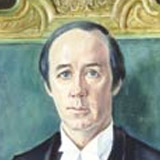
Hon. James Jerome
Speaker of the House
Ruling Text
<div class="DecisionMain" role="main">
<p class="decision-chapter">Amendments and Subamendments to Motions / Amendment Beyond Scope of Motion</p>
<p class="d-DecisionDate">
<time>May 10, 1976</time>
</p>
<p class="e-Debates">Journals <a href="https://parl.canadiana.ca/view/oop.HOC_3001_121_02/493">p. 1278</a></p>
<p class="e-Debates">Debates <a href="https://parl.canadiana.ca/view/oop.debates_HOC3001_13/171?r=0&s=1">p. 13359</a></p>
<div>
<h2 class="f-ContextResoEdNotePostscriptTitle">Background</h2>
</div>
<p class="g-contextResoEdNotePostscript">When, during private Members' hour on February 3, the House was considering a motion standing in the name of Mr. Nielsen (Yukon) requesting the application of constitutional principles to the two Territories, Mr. Symes (Sault Ste. Marie) proposed an amendment seeking to have the motion referred to the Standing Committee on Indian Affairs and Northern Development and to authorize the Committee to travel and hear witnesses. The Acting Speaker (Mr. Turner) questioned the acceptability of the amendment and reserved judgment on it while allowing the debate to continue.</p>
<h2 class="f-ContextResoEdNotePostscriptTitle">Issue</h2>
<p class="g-contextResoEdNotePostscript">Is an amendment to a private Member's motion which refers the motion to a committee acceptable?</p>
<h2 class="f-ContextResoEdNotePostscriptTitle">Decision</h2>
<p class="g-contextResoEdNotePostscript">The amendment is out of order because it is a substantive motion.</p>
<h2 class="f-ContextResoEdNotePostscriptTitle">Reasons given by the Acting Speaker</h2>
<p class="g-contextResoEdNotePostscript">Only certain motions can be received when a question is under debate, according to Standing Order 46. The amendment falls under none of the categories listed.</p>
<p class="g-contextResoEdNotePostscript">The amendment raises a new question not contemplated in the original notice of motion of Mr. Nielsen.</p>
<p class="g-contextResoEdNotePostscript">The amendment is in fact a substantive motion and cannot be considered except as such after due notice.</p>
<h2 class="f-ContextResoEdNotePostscriptTitle">Authorities cited</h2>
<p class="g-contextResoEdNotePostscript">Beauchesne, 4th ed., p. 171, c. 203(5). </p>
<p class="g-contextResoEdNotePostscript">Standing Order 46.</p>
<h2 class="f-ContextResoEdNotePostscriptTitle">References</h2>
<p class="g-contextResoEdNotePostscript">Journals, February 3, 1975, <a href="https://parl.canadiana.ca/view/oop.HOC_3001_121_01/246">p. 267</a>.</p>
<p class="g-contextResoEdNotePostscript">Debates, February 3, 1975, <a href="https://parl.canadiana.ca/view/oop.debates_HOC3001_03/716">pp. 2854-5</a>.</p>
</div>
Edit Metadata
Holding
"The proposed amendment is inadmissible as it goes beyond the scope of the main motion by introducing a new and distinct principle."
AI Summary
The Speaker ruled an amendment inadmissible because it introduced a new principle beyond the scope of the original motion.
AI Analysis
- Outcome
- Sustained
- Tone
- Educational
- Procedural Stage
- Government Orders
- Significance
Low
High
AI Keywords
Cited Authorities
- House of Commons Procedure and Practice (3rd Edition)
- Erskine May (25th Edition)