Ruling
June 3, 1975
Motions in amendment, infringing on financial initiative of the Crown
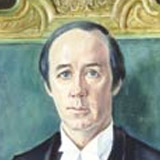
Hon. James Jerome
Speaker of the House
Ruling Text
<div class="DecisionMain" role="main">
<p class="decision-chapter">Amendments to the Content of Bills / Report Stage</p>
<div>
</div>
<p class="d-DecisionDate">
<time>June 3, 1975</time>
</p>
<p class="e-Debates">Journals <a href="https://parl.canadiana.ca/view/oop.HOC_3001_121_01/538">p. 597</a></p>
<p class="e-Debates">Debates <a href="https://parl.canadiana.ca/view/oop.debates_HOC3001_06/963?r=0&s=1">pp. 6407-8</a></p>
<div>
<h2 class="f-ContextResoEdNotePostscriptTitle">Background</h2>
</div>
<p class="g-contextResoEdNotePostscript">As the House was proceeding to the report stage consideration of Bill C-50, an Act to amend the Agricultural Stabilization Act, the Acting Speaker (Mr. Penner) expressed concern about the procedural acceptability of three motions introduced as amendments at report stage. On the basis of his examination, he believed that the motions differed from the terms of the Royal Recommendation which accompanied the bill. Before making a final ruling, however, he was prepared to hear arguments which were made later that day.</p>
<h2 class="f-ContextResoEdNotePostscriptTitle">Issue</h2>
<p class="g-contextResoEdNotePostscript">Are amendments to a bill which vary from the terms of the Royal Recommendation acceptable?</p>
<h2 class="f-ContextResoEdNotePostscriptTitle">Decision</h2>
<p class="g-contextResoEdNotePostscript">The amendments are unacceptable and out of order.</p>
<h2 class="f-ContextResoEdNotePostscriptTitle">Reasons given by the Acting Speaker</h2>
<p class="g-contextResoEdNotePostscript">A Royal Recommendation, as explained in Beauchesne, 4th ed., "must be treated as laying down once and for all (unless withdrawn and replaced) not only the amount of a charge, but also its objects, purposes, conditions and qualifications."</p>
<p class="g-contextResoEdNotePostscript">These three motions differ in one way or another from the specific conditions laid out in the Royal Recommendation.</p>
<h2 class="f-ContextResoEdNotePostscriptTitle">Authority cited</h2>
<p class="g-contextResoEdNotePostscript">Beauchesne, 4th ed., p. 207, c. 246(3).</p>
<h2 class="f-ContextResoEdNotePostscriptTitle">References</h2>
<p class="g-contextResoEdNotePostscript">Debates, June 3, 1975, <a href="https://parl.canadiana.ca/view/oop.debates_HOC3001_06/953">pp. 6397</a>, <a href="https://parl.canadiana.ca/view/oop.debates_HOC3001_06/961">6405-6</a>.</p>
</div>
Edit Metadata
Holding
"Amendments that infringe upon the financial initiative of the Crown by increasing an appropriation, altering its destination, or extending its objects and purposes are procedurally inadmissible and cannot be put to the House."
AI Summary
A ruling affirming the principle that amendments infringing on the financial initiative of the Crown by proposing new or increased spending without a royal recommendation are out of order.
AI Analysis
- Outcome
- Sustained
- Tone
- Educational
- Procedural Stage
- Government Orders
- Significance
Low
High
AI Keywords
Cited Authorities
- House of Commons Procedure and Practice (3rd Edition)
- Beauchesne's Parliamentary Rules and Forms (6th Edition)