Other
April 14, 1975
Guidelines
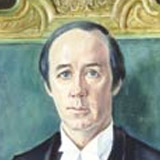
Hon. James Jerome
Speaker of the House
Ruling Text
<div class="DecisionMain" role="main">
<p class="decision-chapter">Questions / Oral Questions</p>
<p class="d-DecisionDate">
<time>April 14, 1975</time>
</p>
<p class="e-Debates">Journals <a href="https://parl.canadiana.ca/view/oop.HOC_3001_121_01/398">pp. 439-41</a></p>
<p class="e-Debates">Debates <a href="https://parl.canadiana.ca/view/oop.debates_HOC3001_05/402?r=0&s=1">pp. 4762-4</a></p>
<div>
<h2 class="f-ContextResoEdNotePostscriptTitle">Background</h2>
</div>
<p class="g-contextResoEdNotePostscript">On April 7, 1975, an experiment in procedure, designating a fixed time for the Question Period, began. The Speaker used the occasion to explain general principles by which the Question Period should be conducted.</p>
<p class="g-contextResoEdNotePostscript">1) Question Period has evolved from a privilege to a right for any Member. The Speaker, however, enjoys discretion in allowing a question, and even more so with a supplementary.</p>
<p class="g-contextResoEdNotePostscript">2) When answering a question Ministers may:</p>
<ul style="list-style-type:disc">
<li>answer the question;</li>
<li>defer their answer;</li>
<li>take the question as notice;</li>
<li>make a short explanation as to why they cannot make an answer at that time;</li>
<li>say nothing.</li>
</ul>
<p class="g-contextResoEdNotePostscript">3) A question must:</p>
<ul style="list-style-type:disc">
<li>be a question;</li>
<li>be brief;</li>
<li>seek information;</li>
<li>address itself to an important matter of some urgency;</li>
<li>be within the administrative responsibility of the government or the Minister addressed.</li>
</ul>
<p class="g-contextResoEdNotePostscript">4) A question must not:</p>
<ul style="list-style-type:disc">
<li>be a statement, representation or argument;</li>
<li>be an expression of opinion;</li>
<li>be hypothetical;</li>
<li>seek an opinion, either legal or of policy;</li>
<li>suggest the answer;</li>
<li>make a representation;</li>
<li>address a Minister in his former portfolio;</li>
<li>be a question previously answered;</li>
<li>be on a matter which is <i>sub judice</i>;</li>
<li>refer to statements made by Ministers outside the House;</li>
<li>anticipate Orders of the Day.</li>
</ul>
<p class="g-contextResoEdNotePostscript">5) Supplementary questions:</p>
<ul style="list-style-type:disc">
<li>should contain no preamble or statement;</li>
<li>should be precise and should be put directly and immediately to the Minister.</li>
</ul>
<p class="g-contextResoEdNotePostscript">6) Question Period will not be interrupted by questions of privilege or points of order.</p>
<p class="g-contextResoEdNotePostscript">7) The proper way to deal with any unsatisfactory answer is through the adjournment debate.</p>
<h2 class="f-ContextResoEdNotePostscriptTitle">References</h2>
<p class="g-contextResoEdNotePostscript">Beauchesne, 5th ed., pp. 129-34, c. 356-71.</p>
</div>
Edit Metadata
Holding
"The provided text 'Guidelines' is not a Speaker's Ruling and cannot be analyzed."
AI Summary
Analysis failed as the provided text was not a Speaker's Ruling.
AI Analysis
- Outcome
- Other
- Tone
- Neutral
- Procedural Stage
- Not applicable
- Significance
Low
High