Ruling
February 11, 1975
Subamendment relevant to amendment
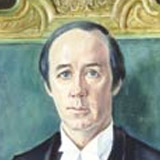
Hon. James Jerome
Speaker of the House
Ruling Text
<div class="DecisionMain" role="main">
<p class="decision-chapter">Amendments and Subamendments to Motions / Subamendment Relevant to Amendment</p>
<p class="d-DecisionDate">
<time>February 11, 1975</time>
</p>
<p class="e-Debates">Journals <a href="https://parl.canadiana.ca/view/oop.HOC_3001_121_01/263">p. 286</a></p>
<p class="e-Debates">Debates <a href="https://parl.canadiana.ca/view/oop.debates_HOC3001_03/983?r=0&s=1">pp. 3121-2</a> </p>
<div>
<h2 class="f-ContextResoEdNotePostscriptTitle">Background</h2>
</div>
<p class="g-contextResoEdNotePostscript">During debate on an amendment proposed to the second reading of Bill C-49, an Act to amend the statute law relating to income tax, which replaced all the words after “That” with the following:</p>
<p class="l-speakerCitationElipsis" style="margin-left: 25px; margin-right:35px; text-align:left;">"this House declines to give second reading to Bill C-49, an Act to amend the statute law relating to income tax, because it fails to provide for a further 5 per cent reduction in personal income tax in the 1975 and subsequent taxation years despite unprecedented government revenues and the resulting overtaxation by the government”.</p>
<p class="g-contextResoEdNotePostscript">Mr. Broadbent (Oshawa—Whitby) proposed a subamendment seeking to substitute the words “a further 5 per cent reduction” with the words “a $400 tax credit”. Mr. Turner (Minister of Finance) rose on a point of order and objected to the proposal since it anticipated a clause in the bill. The Acting Speaker (Mr. Penner) heard arguments before making his decision.</p>
<h2 class="f-ContextResoEdNotePostscriptTitle">Issue</h2>
<p class="g-contextResoEdNotePostscript">Does the subamendment introduce a new and different proposition than that contained in the amendment which would require that it be moved as an amendment? If not, is it relevant?</p>
<h2 class="f-ContextResoEdNotePostscriptTitle">Decision</h2>
<p class="g-contextResoEdNotePostscript">The subamendment is in order.</p>
<h2 class="f-ContextResoEdNotePostscriptTitle">Reasons given by the Acting Speaker</h2>
<p class="g-contextResoEdNotePostscript">The Chair has already accepted the reasoned amendment which this subamendment seeks to modify and finds that it meets the rule of relevancy.</p>
<h2 class="f-ContextResoEdNotePostscriptTitle">References</h2>
<p class="g-contextResoEdNotePostscript">Journals, February 11, 1975, <a href="https://parl.canadiana.ca/view/oop.HOC_3001_121_01/262">p. 285</a>.</p>
<p class="MsoNormal">Debates, February 11, 1975, pp. <a href="https://parl.canadiana.ca/view/oop.debates_HOC3001_03/979">3117-8</a>.</p>
</div>
Edit Metadata
Holding
"A subamendment must be strictly relevant to the amendment it seeks to modify and cannot introduce a new, distinct question."
AI Summary
The Speaker ruled a subamendment out of order because it was not strictly relevant to the main amendment.
AI Analysis
- Outcome
- Sustained
- Tone
- Educational
- Procedural Stage
- Government Orders
- Significance
Low
High
AI Keywords
Cited Authorities
- House of Commons Procedure and Practice (3rd)
- Erskine May's treatise on the law, privileges, proceedings and usage of Parliament (25th)