Point of Order
March 27, 1973
Relevance; infringing on financial initiative of the Crown
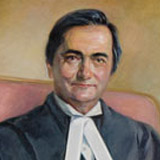
Hon. Lucien Lamoureux
Speaker of the House
Ruling Text
<div class="DecisionMain" role="main">
<p class="decision-chapter">Amendments to the Content of Bills / Report Stage</p>
<p class="d-DecisionDate">
<time>March 27, 1973</time>
</p>
<p class="e-Debates">Journals <a href="https://parl.canadiana.ca/view/oop.HOC_2901_119_01/196">pp. 218-9</a></p>
<p class="e-Debates">Debates <a href="https://parl.canadiana.ca/view/oop.debates_HOC2901_03/345?r=0&s=1">pp. 2663-4</a></p>
<div>
<h2 class="f-ContextResoEdNotePostscriptTitle">Background</h2>
</div>
<p class="g-contextResoEdNotePostscript">As the House was about to begin report stage consideration of Bill C-147, an Act to amend the Old Age Security Act, Mr. Reid (Parliamentary Secretary to the President of the Privy Council) rose on a point of order to question the acceptability of five motions in amendment that had been filed. He claimed that each of the five motions had the effect of increasing the amount of money to be allotted for particular programs and, consequently, violated the terms of the Royal Recommendation. The Acting Speaker (Mr. Laniel) heard additional comments from Members and offered guidance on the procedural issues involved before making his ruling.</p>
<h2 class="f-ContextResoEdNotePostscriptTitle">Issue</h2>
<p class="g-contextResoEdNotePostscript">Do the proposed motions 111 amendment exceed the terms of the Royal Recommendation?</p>
<h2 class="f-ContextResoEdNotePostscriptTitle">Decision</h2>
<p class="g-contextResoEdNotePostscript">Yes. The motions in amendment therefore cannot be admitted.</p>
<h2 class="f-ContextResoEdNotePostscriptTitle">Reasons given by the Acting Speaker</h2>
<p class="g-contextResoEdNotePostscript">The obligation of the Chair is to apply the Standing Orders and to see that the practices and customs of the House are upheld. In this case, the proposed motions in amendment are not accompanied by the required Royal Recommendation and cannot be admitted.</p>
<h2 class="f-ContextResoEdNotePostscriptTitle">Sources cited</h2>
<p class="g-contextResoEdNotePostscript">Standing Orders 62 and 75.</p>
<p class="g-contextResoEdNotePostscript">Debates, May 16, 1972, <a href="https://parl.canadiana.ca/view/oop.debates_HOC2804_03/364">pp. 2326-7</a>. </p>
<p class="g-contextResoEdNotePostscript">Beauchesne, 4th ed., p. 207, c. 246.</p>
<p class="g-contextResoEdNotePostscript">May, 18th ed., pp. 505, 507-9, 512,692, 754.</p>
<h2 class="f-ContextResoEdNotePostscriptTitle">References</h2>
<p class="MsoNormal">Debates, March 27, 1973, <a href="https://parl.canadiana.ca/view/oop.debates_HOC2901_03/331">pp. 2649-54</a>, <a href="https://parl.canadiana.ca/view/oop.debates_HOC2901_03/342">2660-3</a>.</p>
</div>
Edit Metadata
Holding
"An amendment may be ruled out of order if it is not relevant to the bill or motion under consideration, or if it infringes on the financial initiative of the Crown by proposing an expenditure without a Royal Recommendation."
AI Summary
A ruling on a point of order regarding an amendment's relevance and its potential infringement on the Crown's financial initiative.
AI Analysis
- Outcome
- Other
- Tone
- Neutral
- Procedural Stage
- Government Orders
- Significance
Low
High