Point of Order
May 7, 1971
Withdrawal of bill; failure to oppose principle of bill
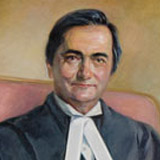
Hon. Lucien Lamoureux
Speaker of the House
Ruling Text
<div class="DecisionMain" role="main">
<p class="decision-chapter">Amendments to Motions on Progress of Bills / Second Reading</p>
<p class="d-DecisionDate">
<time>May 7, 1971</time>
</p>
<p class="e-Debates">Journals <a href="https://parl.canadiana.ca/view/oop.HOC_2803_117_01/487?r=0&s=1">p. 534</a></p>
<p class="e-Debates">Debates <a href="https://parl.canadiana.ca/view/oop.debates_HOC2803_06/67?r=0&s=1">pp. 5613-6</a></p>
<div>
<h2 class="f-ContextResoEdNotePostscriptTitle">Background</h2>
</div>
<p class="g-contextResoEdNotePostscript">During debate on the motion for second reading of Bill C-244, an Act respecting the stabilization of prairie grain sale proceeds ..., Mr. Gleave (Saskatoon-Biggar) proposed an amendment to withdraw the bill and replace it with two separate bills. One bill would contain those portions of Bill C-244 dealing with special transitional payments, and the other would deal with long-term stabilization of prairie grain prices. Such a move, he argued, would allow a more objective examination of the legislation before the House. Having expressed some reservations about the amendment, the Deputy Speaker allowed Mr. Gleave to complete his remarks and then ruled.</p>
<h2 class="f-ContextResoEdNotePostscriptTitle">Issue</h2>
<p class="g-contextResoEdNotePostscript">Is an amendment acceptable if it suggests that the bill be withdrawn and be replaced by two separate bills?</p>
<h2 class="f-ContextResoEdNotePostscriptTitle">Decision</h2>
<p class="g-contextResoEdNotePostscript">No. The amendment is out of order.</p>
<h2 class="f-ContextResoEdNotePostscriptTitle">Reasons given by the Deputy Speaker</h2>
<p class="g-contextResoEdNotePostscript">It seems that for an amendment to be acceptable as a reasoned amendment, it must oppose or be adverse to the principle of the bill, not to its form. The amendment says in essence that the bill should be divided. It does not quarrel with the principle of the bill, but rather with the form in which the bill is presented to the House.</p>
<h2 class="f-ContextResoEdNotePostscriptTitle">Sources cited</h2>
<p class="g-contextResoEdNotePostscript">Beauchesne, 4th ed., p. 277, c. 382. </p>
<p class="g-contextResoEdNotePostscript">Journals, May 6, 1971, <a href="https://parl.canadiana.ca/view/oop.HOC_2803_117_01/484">pp. 531-2</a>.</p>
<h2 class="f-ContextResoEdNotePostscriptTitle">References</h2>
<p class="MsoNormal">Debates, May 7, 1971, <a href="https://parl.canadiana.ca/view/oop.debates_HOC2803_06/63">pp. 5609-15</a>.</p>
</div>
Edit Metadata
Holding
"The House may, by unanimous consent, permit the withdrawal of a bill at any stage of the proceedings, including after it has received second reading."
AI Summary
The Speaker ruled that a bill can be withdrawn by unanimous consent even after its principle has been approved at second reading.
AI Analysis
- Outcome
- Denied
- Tone
- Educational
- Procedural Stage
- Government Orders
- Significance
Low
High